A transformer can behave perfectly in a circuit simulation and still run hot or noisy in the assembled product. Winding geometry, insulation, core selection and the surrounding layout all affect the result. For power-supply engineers, the useful question is how to turn an electrical target into a component that can be built consistently across production batches.
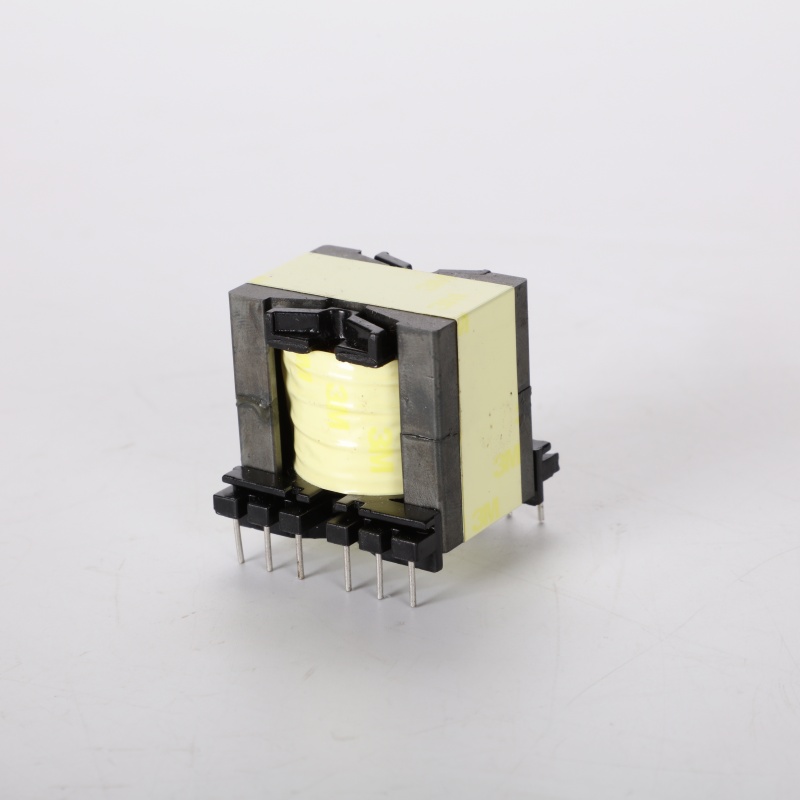
For an integrated LLC resonant transformer, leakage inductance is often an intentional part of the design. The specified value and tolerance need to match the resonant circuit, and the winding arrangement influences the result. Ask the manufacturer how samples are measured and what control plan keeps production within the agreed window. An out-of-tolerance part can change switching behaviour or thermal performance, but the failure mode depends on the entire converter design.
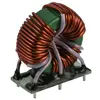
Common-mode choke design involves more than choosing the highest-permeability material. Core losses, saturation limits, frequency range, leakage, winding insulation and the operating temperature all need to be considered. Ferrite and nanocrystalline materials each have useful applications; the right choice comes from the EMI target and a tested circuit, not a blanket assumption that one material is always better.
A nanocrystalline common-mode choke may reduce size or improve attenuation in a particular design, but the result depends on core dimensions and windings. Have the supplier provide the relevant curves and test the assembled filter with the real cable and grounding arrangement.
High-current inductors bring a different trade-off. AC resistance, winding temperature, mechanical space and core saturation can all become limiting. Flat copper or litz constructions are options worth comparing when they fit the frequency and current profile. A thermal test at representative load reveals more than the conductor name alone.
Production controls matter after the design has been chosen. Agree on inductance tolerance, insulation testing, dimensional checks and the handling of design changes. Impregnation, air-gap processing and acoustic checks can be relevant to some parts, but not every design uses the same manufacturing steps.
TrafoPSU’s magnetic-component range is a starting point for an engineering enquiry. Share the schematic, switching frequency, operating waveforms, isolation needs and enclosure constraints. A useful supplier response should identify which specifications are already proven and which still require prototype measurement.
Share your waveforms, insulation needs and first prototype measurements with TrafoPSU so the next discussion starts from the real circuit.